(ECNS) - China has completed a key underwater section of a high-speed rail tunnel beneath the Yangtze River, marking a major step forward in the construction of a 2,100-km east-west rail corridor.
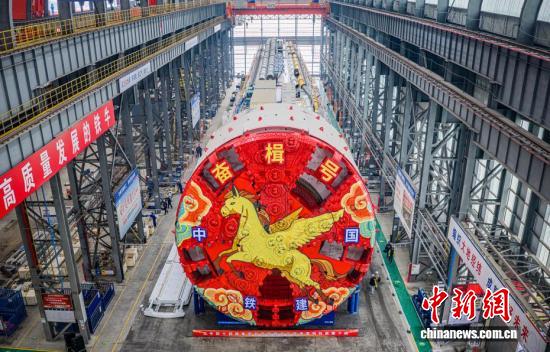
The breakthrough was achieved using the world's largest high-speed rail tunnel-boring machine, known as "Linghang," which has completed excavation beneath the river.
The project is part of the Chongming-Taicang Yangtze River tunnel, a 14-km (8.7-mile) passage that will allow trains to travel at up to 350 kph once operational.
Unlike most existing high-speed rail crossings over the Yangtze, which rely on bridges, engineers opted for an underwater tunnel because of heavy shipping traffic on the river, one of China's busiest waterways.
The area is also subject to environmental protection, including aquatic conservation zones, and tunneling was seen as a way to reduce ecological disruption. The underground approach minimizes land acquisition and reduces exposure to adverse weather.
The tunnel is expected to set multiple engineering records, including the longest single-head excavation distance for a high-speed rail tunnel at 11.3 km, the largest diameter at 15.4 meters, and the deepest section beneath the Yangtze River at 89 meters.
The broader rail line will run from Shanghai through Jiangsu, Anhui and Hubei provinces to Chongqing and Chengdu, forming a major transport corridor along the Yangtze.
Once completed, the line is expected to significantly cut travel times. Journeys between Shanghai and Chengdu could be reduced to about 6.7 hours from more than 12 hours, while trips between Shanghai and Chongqing could be shortened to around 5.3 hours.
(By Zhang Jiahao)
 |